

“Power is constitutive of the story”
– Trouillot
Despite reading Trouillot’s book for the first time, the main arguments of the book rang a bell in my memory. It throws me back to my freshman era, to one of Professor Bambang Purwanto’s class. Whichever class it was, either ‘Introductory to Indonesian History’ or ‘Indonesian Historiography’, now I realized that his explanation was the reflection of Trouillot’s Silencing the Past in the context of Indonesian history. The explanation shaped and gave a foundation to my awareness on how history and historiography are produced: That history is not always the story of the victors; that it is not merely about the black-and-white event, person, or everything that are recorded on the archives; that there will always be an amount of subjectivity in every historical narratives; and, most importantly, that narratives are not produced without any purposes.
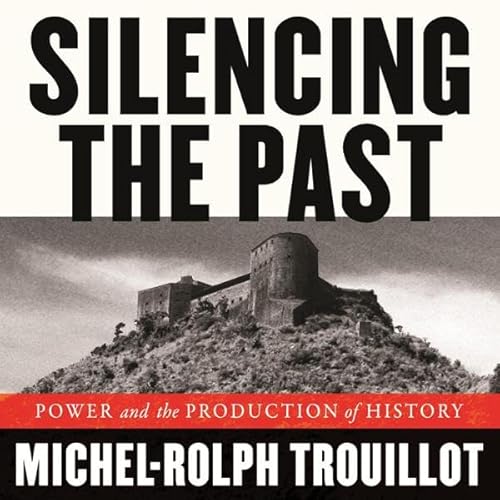
Silencing the Past offers a packed of deconstructive ideas on the production of history,
however, I should say that the influence of power in the making of history is the most essential point. Trouillot begins his explanation by mentioning the difference between “what happened (history as a process)” and “what is said to be happened (history as a narrative)”, which he called the duality of historicity. He points that both positivism and constructivism supporters tend to focus only on one side of historicity, so that they potentially belittle or, at worst, deny the amount of the impact of power on history production.1 He also argues that power in the making of history actually presents from the very first phase of its process (the moment the facts/sources are created) before continuing the next steps: the moment the facts organized into archives, the moment archives are employed on historical narratives, to the moment people use, accept and believe historical narratives as the truth.2
Trouillot presents his core point of view clearly in the first chapter of the book. In the
second, third, and fourth chapter, he demonstrates how power is capable to mention or silence certain aspects of history by giving various detailed examples. I can follow his arguments very well until the end of chapter two, whereas his arguments in chapter 3 and 4 are rather difficult to digest without making a comparison to Indonesian history. For example, I had to imagine the Indonesian 1965 tragedy to relate on the debates of Haitian Revolution in the chapter 3. According to Trouillot, many conventional narratives of Haitian Revolution underestimate the event itself due to insufficiency of recognition from the Western world, that disdain the event by simply saying, “It did not really happen.”3 Power also mutes a series of events, and the life of thousands of people, after the failed coup d’etat in 1965 in Indonesia.4 I had to recall, as well, my understanding on the book Ketika Sejarah Berseragam (History in Uniform: Military Ideology and the Construction of Indonesia’s Past) written by Katharine McGregor to deeply understand what Trouillot means by choosing the Columbus story on chapter four. To understand why the power needs to define certain terms and how they define “what happened” to “what is said to be happened”, I reflect on how the historiography of Indonesia was shaped during Soeharto’s New Order through the official history. Fortunately, I can resonate with him again on the last chapter about the reflection of how the past and the present always entangle to each other, and how they influence the future.
Nevertheless, the fact that I can easily put the context of Indonesian historiography on
Trouillot’s arguments only proves that his ideas about power, historical narratives, and historicity gives essential impacts to broad spectrum of knowledge. Not only the study of history and historiography, but it can also be employed on other disciplines, like archival studies, anthropology and politics. His work solidifies the arguments of Ricardo Roque and Kim Wagner in “Introduction: Engaging colonial knowledge” and Saidiya Hartman in “Venus in Two Acts” at least in two aspects. First, in the context of archival studies, Roque and Wagner, Hartman, and Trouillot acknowledge that power presents in the production of facts, sources, records, or knowledge. However, while Roque and Wagner offer rather a positive proposal on engaging colonial knowledge by embracing the dominance of power in both knowledge and colonialism,5 Hartman and Trouillot seem more sceptical towards colonial records. Second, in historiography perspective, Trouillot’s contesting colonial power to silence Haitian Revolution in history amplifies the same frustration Hartman voices about the loud silence of woman slaves in colonial records and narratives. Both authors prove the capability of power—in this case, colonial authority—in producing history, so that they get the urge to seek alternative perspectives to present their concern on the subaltern and silenced historical facts. In her work, Hartman says that archives “is inseparable from the play power that murdered Venus…”,6 meanwhile Trouillot notes that despite his significant role in the Haitian Revolution, the facts about Colonel Sans Souci are “often alluded to without mention of grade or origins, without even first name…”.7
Notwithstanding his critical arguments on the dominance of power in history production, I
dare to say that Trouillot’s ideas are not groundbreaking in postcolonial studies. Some notable works contesting the dominance of colonial perspective of historical narratives have been released before the publicity of Silencing the Past in 1995, for instance Orientalism(Edward Said, 1978) and Can the Subaltern Speak? (Gayatri Spivak, 1988). Yet, it is quite regrettable that he only mentions Metahistory: The Historical Imagination in Nineteenth Century Europe (Hayden White, 1973) and a very brief of Ranajit Guha in the notation.8 Nevertheless, every notion from Trouillot’s Silencing the past, especially on Haitian Revolution, deserves a louder applause for its contribution and impact in diverse disciplines.
- M.R. Trouillot, Silencing the Past: Power and the Production of History, Boston: Beacon Press, 1995, p.4-6 ↩︎
- Ibid., p.26 ↩︎
- Ibid., p.96 ↩︎
- John Roosa, “The State of Knowledge about an Open Secret: Indonesia’s Mass Disappearances of 1965–66”, The Journal of Asian Studies, May 2016, Vol. 75, No. 2. p. 283 ↩︎
- Ricardo Roque and Kim A. Wagner, “Introduction: Engaging Colonial Knowledge,” in Ricardo Roque and Kim A. Wagner (ed.), Engaging Colonial Knowledge Reading European Archives in World History, Palgrave Macmillan, 2012. p. 7 ↩︎
- Saidiya Hartman, Venus in Two Act, Small Axe, Number 26 (Volume 12, Number 2), June 2008, p. 10-11 ↩︎
- M.R. Trouillot, op.cit., p. 54 ↩︎
